


















How to Sharpen a Laguiole Knife: Angle, Whetstone Grits & Step-by-Step Method
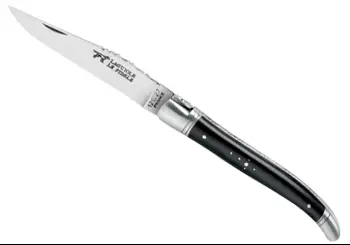
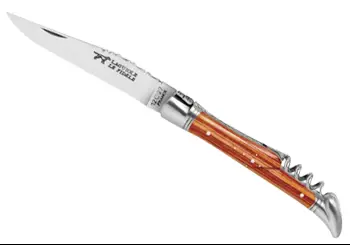
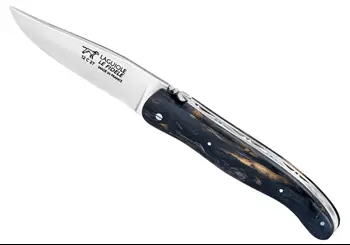
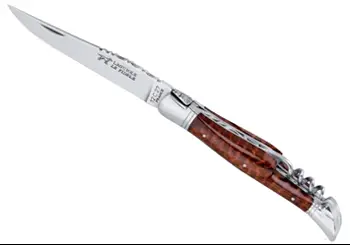
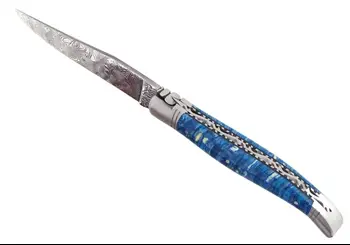
A Laguiole knife is a symbol of fine French craftsmanship. To maintain its sharpness and ensure clean, precise cutting, regular sharpening is essential.
Whether your Laguiole blade is stainless steel or carbon steel, this guide explains how to sharpen a Laguiole knife properly while preserving the original blade geometry and finish.
Authenticity & guides → | Laguiole leather sheaths → | Knife care guide (cleaning & storage) →
Table of contents
- Why sharpening your Laguiole knife matters
- Best tools for sharpening a Laguiole knife
- Ideal sharpening angle for a Laguiole knife
- Step-by-step: how to sharpen a Laguiole knife
- How often should you sharpen a Laguiole knife?
- Common sharpening mistakes to avoid
- Laguiole Damascus knives and cutlery sets
- FAQ – Sharpening a Laguiole knife
Why sharpening your Laguiole knife matters
Over time, even premium blades lose their edge. Proper sharpening helps to:
- ✔ Restore optimal cutting performance
- ✔ Improve slicing precision
- ✔ Reduce the need for excessive pressure
- ✔ Extend the life of the blade
- ✔ Preserve the integrity of handcrafted steel
Best tools for sharpening a Laguiole knife
Choosing the right sharpening tool is crucial to avoid damaging the blade.
- ✔ Whetstone (sharpening stone) – best option for precise edge restoration. Use 800–1000 grit for sharpening and 3000–6000 grit for refining and polishing.
- ✔ Ceramic or diamond honing rod – ideal for regular maintenance between sharpenings.
- ✔ Natural stone – traditionally used for artisan knives and excellent for finishing when mastered.
❌ Avoid electric sharpeners or pull-through sharpeners: they remove too much material and can damage the blade’s edge geometry.
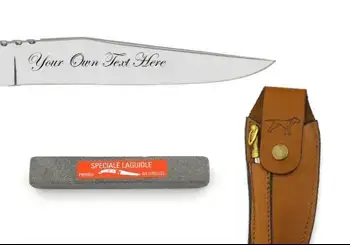
View a sharpening stone suitable for knives →
What is the ideal sharpening angle for a Laguiole knife?
The recommended sharpening angle is 18° to 20° per side. This provides an excellent balance between sharpness and edge durability (especially relevant for pocket knives).
Quick tip to keep the angle consistent
Consistency matters more than perfection: aim to keep the same angle throughout the stroke. A stable setup and a smooth motion usually produce a cleaner, longer-lasting edge than “overthinking” the exact degrees.
Step-by-step: How to sharpen a Laguiole knife
1) Prepare the whetstone
If using a water stone, soak it for 5–10 minutes (or follow the stone manufacturer’s instructions).
2) Stabilize your workstation
Place the stone on a non-slip base (silicone holder or damp towel). A stable stone improves safety and edge consistency.
3) Position the blade
Hold the blade at approximately 18–20° against the stone. Maintain this angle consistently throughout the process.
4) Sharpen the edge (800–1000 grit if the knife is dull)
- Slide the blade smoothly across the stone in a controlled motion.
- Work from heel to tip.
- Perform 10–15 strokes per side (adjust based on the condition of the edge).
- Apply moderate, consistent pressure—too much pressure can remove excess steel and distort the edge.
5) Refine and remove the burr (3000–6000 grit)
Switch to a finer stone to refine the edge and reduce the burr. Finish with lighter alternating strokes (one side, then the other) to help straighten and clean the cutting edge.
6) Clean and protect
- Wipe the blade dry and dry immediately after cleaning.
- Apply a light coat of food-safe oil if the blade is carbon steel (especially for long storage).
- Store in a dry environment; for transport, use a protective sheath.
Protect your knife with a leather sheath →
How often should you sharpen a Laguiole knife?
- ✔ Daily use: about once per month (depending on what you cut)
- ✔ Occasional use: every 3–6 months
- ✔ Light honing: every 2–3 weeks
- ✔ Professional sharpening: as needed (very dull edge, chips, or incorrect angle)
Common sharpening mistakes to avoid
- ❌ Using an angle that is too narrow (weakens the edge) or too wide (reduces cutting performance)
- ❌ Applying excessive pressure
- ❌ Using electric or pull-through sharpeners on premium blades
- ❌ Leaving carbon steel wet after sharpening
- ❌ Inconsistent angle throughout the stroke
Laguiole Damascus knives and cutlery sets
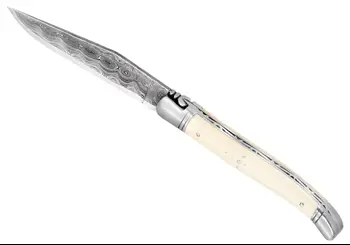
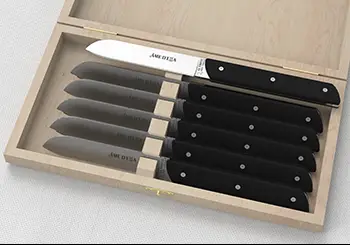
 Laguiole knife Damascus edition with ebony wood
 Laguiole forks set with blond horn tip handle
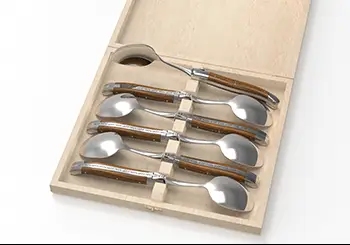
 Laguiole spoons set with bovine bone handle
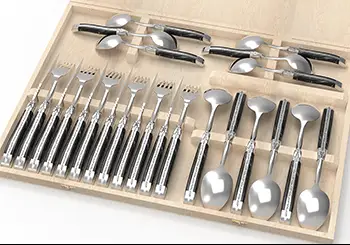
 Laguiole cutlery set with birch wood handle
 Laguiole spoons set with ebony wood handle
 Laguiole spoons set with boxwood handle
FAQ – Sharpening a Laguiole Knife
What is the best angle to sharpen a Laguiole knife?
The ideal sharpening angle is between 18° and 20° per side, providing a sharp yet durable cutting edge.
Can I use an electric sharpener for a Laguiole knife?
It is not recommended. Electric sharpeners remove too much steel and may damage blade geometry. A whetstone is the safest method for premium knives.
What grit whetstone should I use?
Use a 800–1000 grit stone to sharpen and a 3000–6000 grit stone to refine and polish the edge. View the recommended sharpening stone →
How do I know when my Laguiole knife needs sharpening?
If the blade struggles to slice tomatoes cleanly or requires extra pressure, it’s time to sharpen.
Is sharpening different for carbon steel Laguiole knives?
The technique is the same, but carbon steel requires careful drying and light oiling afterward to prevent oxidation—especially before long-term storage.