
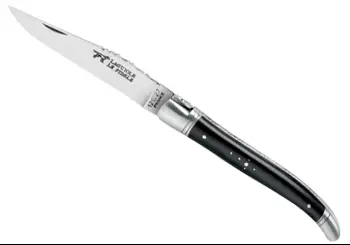
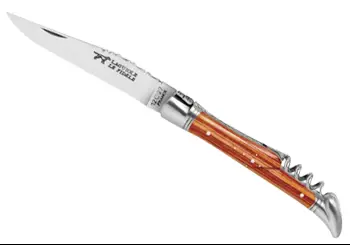
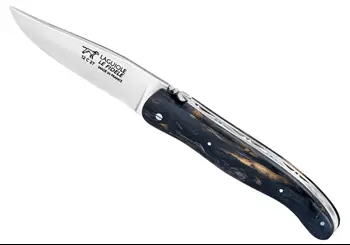
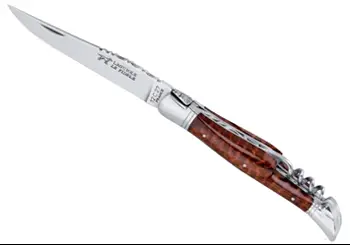
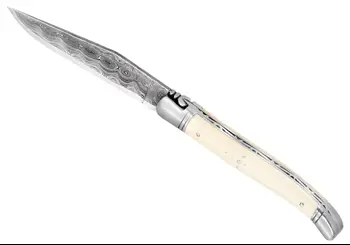
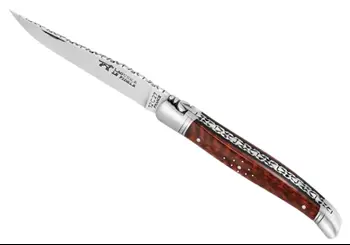
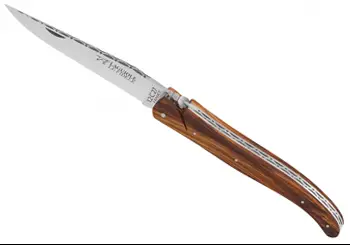
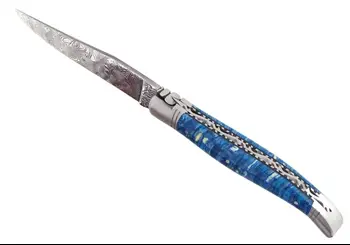
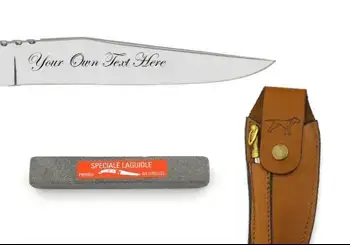

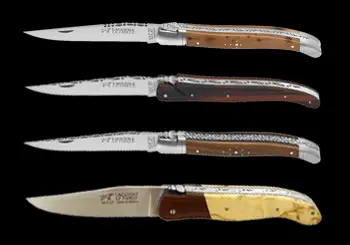
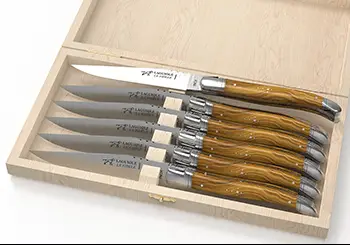

























A traditional Laguiole knife usually features a slip joint (spring-back) mechanism, known in French as “cran forcé”. Understanding how it works will help you close your Laguiole knife safely, avoid injury, and preserve backspring tension and the blade edge over time (the blade should never snap shut against the spring).
Contents
- Understanding the slip joint mechanism
- Video: how to open and close your Laguiole
- Step-by-step: how to close a Laguiole knife
- Common mistakes to avoid
- Maintenance tips for smooth closing
- Laguiole knives, hunting knives and cutlery sets
- FAQ
Understanding the Traditional Slip Joint Mechanism
How does it work?
- When the knife is fully open, the backspring engages the notch at the base of the blade, helping prevent accidental closure.
- To close the knife, you apply controlled pressure to overcome spring tension and guide the blade slowly back into the handle.
The resistance you feel is intentional — it’s a safety feature. The goal is not to force the blade shut, but to smoothly pass the tension point and keep full control of the closing motion.
Video: How to Open and Close Your Laguiole Knife Properly
Watch the video demonstration showing the correct technique to open and close a Laguiole knife.
Important: avoid letting the blade snap shut against the spring. A controlled closure protects the mechanism and helps preserve the cutting edge.
Step-by-Step: How to Close Your Laguiole Knife
1) Hold the handle firmly
Grip the handle securely with your dominant hand in a stable position. Keep your fingers away from the blade’s path, and keep your other hand clear of the closing area.
2) Position the blade safely
Point the blade away from your body and make sure your workspace is clear. Closing slowly and in control is the safest approach.
3) Release spring tension smoothly (no jerks)
Apply steady, controlled pressure to move past the tension point. On traditional Laguiole knives, there is no button lock — spring tension alone holds the blade open.
4) Guide the blade slowly into the handle
Once the tension point is passed, gently fold the blade into the handle. Never allow it to snap closed.
5) Final check
Make sure the blade is fully closed and properly seated inside the handle before putting the knife away.
Common Mistakes to Avoid
- Forcing the blade instead of passing the tension point smoothly
- Letting the blade snap shut against the spring
- Placing fingers in the blade’s closing path
- Closing too quickly without stability (especially on a new, firm slip joint)
If your Laguiole knife is new, spring tension may feel firm at first — this is normal. With proper technique (and light maintenance), the action often becomes smoother over time.
Maintenance Tips for Smooth Closing
Clean after use
Wipe the blade and pivot area with a soft cloth and dry carefully. Moisture and debris can reduce smooth operation.
Lubricate if necessary
If the mechanism feels stiff, apply a small drop of oil at the pivot (such as 3-in-1 oil or WD-40). Open and close the knife several times, then wipe away excess oil.
Check for unusual play
If you notice abnormal blade movement, unusual noise, or irregular closing, have the knife inspected to preserve its longevity.
Protect your knife: view our leather sheaths | Contact / repair inquiries
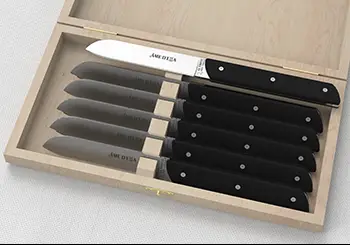
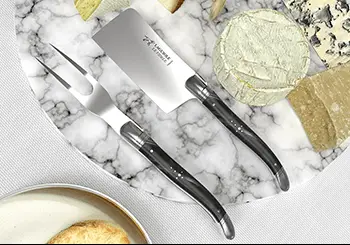
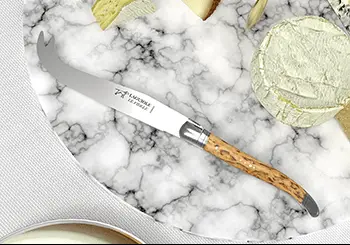
Laguiole knives, hunting knives and cutlery sets
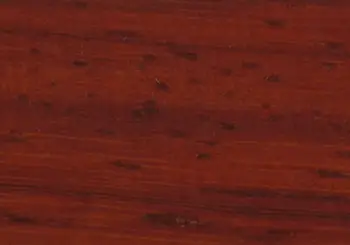
 Prestige Laguiole knife with royal ebony wood handle
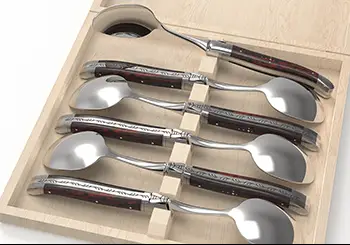
 Laguiole dessert spoons set with gaiac wood handles
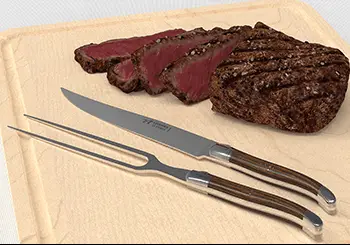
 Laguiole hunting knife with forged spring and dark birch wood handle
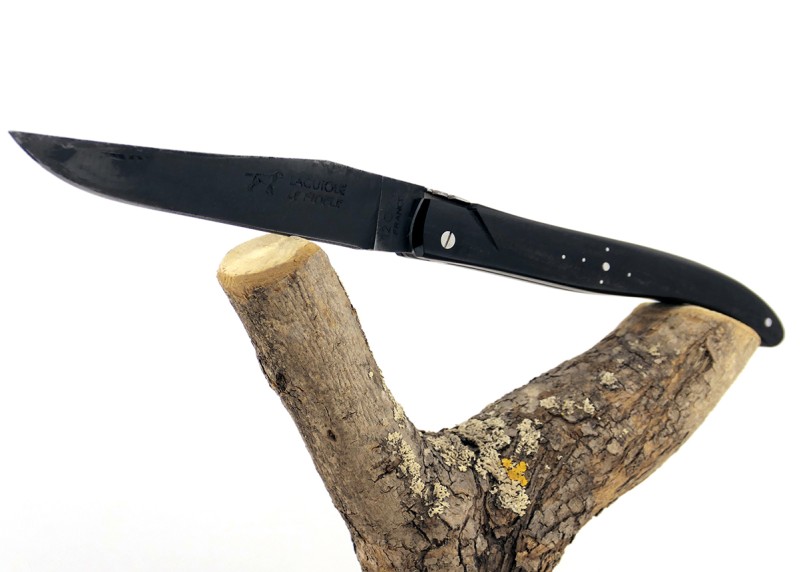 Forged Laguiole knife with Cameroun ebony wood handle
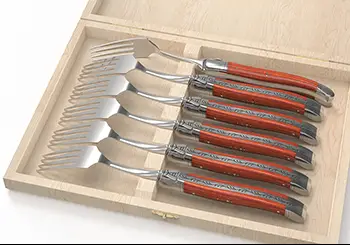
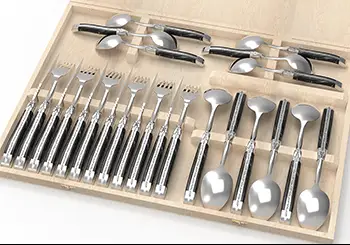
 Laguiole cutlery set with pistachio wood handles
 Traditional Laguiole knife with African padauk wood handle
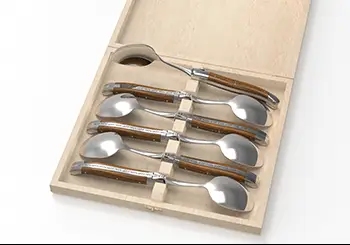
 Laguiole dessert spoons set with serpent wood handles
FAQ – Closing a Laguiole Knife
Why is my Laguiole knife difficult to close?
Slip joint spring tension is intentionally firm. On a new knife, it may feel stronger. With the correct technique and light maintenance, it typically becomes smoother over time.
Do I need to press a button to close a Laguiole knife?
No. Traditional Laguiole knives do not have a button lock. You close the blade by overcoming spring tension with controlled pressure.
Is it safe to close a Laguiole knife with one hand?
It can be risky if spring tension is strong or your grip is unstable. For safety, close the knife slowly and in a controlled manner — especially on new knives.
Why should I avoid letting the blade snap shut?
Snapping the blade closed can mark internal parts, fatigue the backspring over time, and may affect the blade edge. A gentle, controlled closure is best for long-term durability.
What should I do if my Laguiole knife squeaks or sticks?
Clean the pivot area, dry it thoroughly, and apply a small drop of oil. If the issue persists (play, rubbing, irregular action), consider having the knife inspected.
Can a Laguiole knife be repaired if the mechanism is damaged?
Yes. In most cases, the spring, pivot pin, or internal adjustment can be repaired by a skilled workshop, extending the life of your Laguiole knife.