
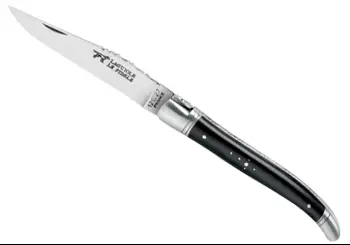
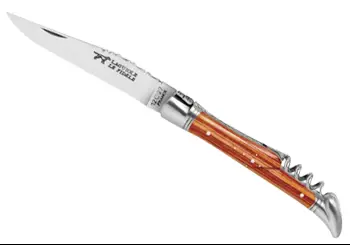
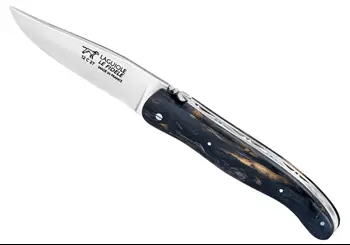
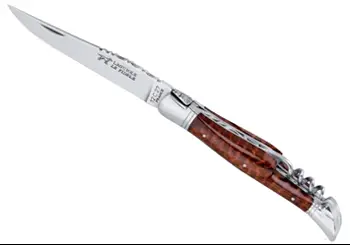
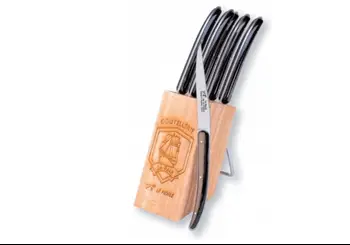













If you’re reading this page, you probably have doubts about your knife’s authenticity. You’re not alone: the term “Laguiole” is widely used, and the market includes everything from true French-made artisan knives to low-cost mass-produced imports.
First, an important clarification: Laguiole is not a single company. “Laguiole” can refer to: (1) a traditional knife style created in the 19th century, (2) a village in Aveyron (central France), and (3) even a cheese. Because “Laguiole” is not a single globally protected brand name, you may find “Laguiole” knives manufactured worldwide.
However, a high-quality authentic Laguiole follows a recognizable tradition of craftsmanship: precise fit-and-finish, quality materials, proper assembly, and details that mass production often can’t replicate. Below are practical criteria to help you identify a fake / counterfeit Laguiole knife and buy with confidence.
Read our Laguiole authenticity guide → | Handle materials → | Laguiole knife care →
Contents
- Who is “Laguiole”?
- Beware of cheap copies
- 7 criteria to recognize a genuine Laguiole
- IGP / GI: what it means for Laguiole
- FAQ
Who is “Laguiole”?
For newcomers, the Laguiole market can be confusing: many companies sell products under the “Laguiole” name—knives, saucepans, lighters, and more. But using the word “Laguiole” does not automatically mean the seller is a knife maker, nor that the product is handmade in France.
The simplest question to ask: “Who made this knife?”
- A clearly identified workshop / maker name (verifiable)
- Transparent origin (made in France, workshop location)
- Detailed specifications (steel type, dimensions, finishing)
- After-sales support (warranty, repairs, spare parts)
To reduce risk, buy from a clearly identified French workshop or a specialized retailer with real traceability. Historically, many Laguiole-style knives are produced around Thiers (France’s main cutlery hub), with additional workshops in the Laguiole/Aubrac area.
Beware of copies and “too cheap to be true” products
Counterfeit-style products are common online, especially on large marketplaces. Many low-cost “Laguiole” knives are mass-produced abroad using low-grade materials and automated assembly.
Typical red flags seen on fake Laguiole knives
- Low-grade handles (lightweight feel, uneven texture, fast wear)
- Glued bolsters and visible glue lines
- Rough finishing (sharp edges, gaps, scratches, inconsistent polishing)
- Loose mechanics (blade play, poor alignment, harsh open/close action)
- No maker traceability (no real workshop name, no clear origin)
Price is often the fastest warning sign. A box of 6 “Laguiole” table knives sold for €50 is rarely compatible with French artisan manufacturing costs. As a rule, if the price seems “impossible”, the origin and quality often are too.
7 criteria to recognize a genuine Laguiole knife
1) Verify the existence of a real manufacturing workshop
The most reliable indicator is maker transparency. A genuine workshop provides its identity and location, explains how knives are made, and stands behind its products. Look for a clear maker name, a real address, detailed product pages, and evidence of manufacturing steps (assembly, fitting, polishing, finishing).
2) Warranty (against manufacturing defects)
Serious makers typically offer a warranty on manufacturing defects. This is a strong trust signal. Misuse is not covered (a knife is not a screwdriver or can opener), and natural handle materials should be kept away from prolonged water exposure and dishwashers.
3) Repairability and spare parts
Well-made artisan knives are often repairable: springs can be adjusted, parts restored, and in some cases blades replaced. Many low-cost imports are difficult or impractical to repair due to cheap construction and glued components.
4) Made-to-order options & personalization
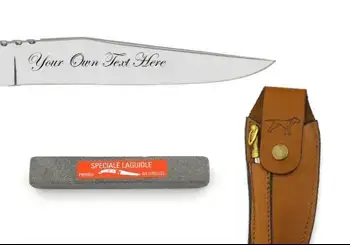
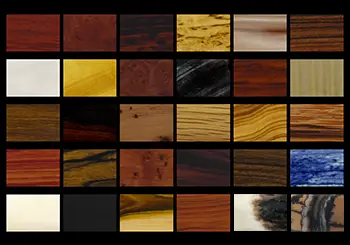
Workshops that truly manufacture can often offer personalization: engraving, handle material choices, and custom finishes. The ability to do made-to-order work generally reflects real control over manufacturing.
5) Bee (or “fly”) ornament: helpful, but not proof
The emblem is commonly called the bee (or sometimes “fly”), but the bee alone does NOT prove authenticity. Many copies include a decorative bee. What matters is the quality of integration and finishing. A bee that looks crude, poorly aligned, or glued is a serious red flag.
6) Spring finishing & guillochage
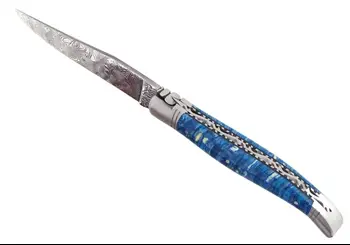
The spring is one of the best areas to inspect. Authentic craftsmanship shows smooth lines, clean polishing, consistent edges, and often hand decoration (guillochage). Rough machining marks, uneven finishing, or sloppy spring fit can indicate mass production.
7) Handle materials, fit, and overall feel
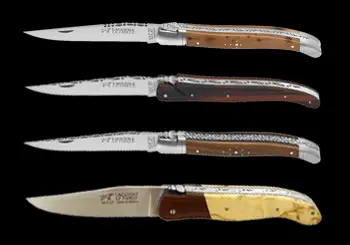
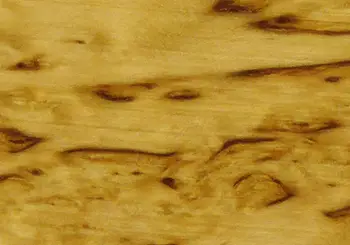
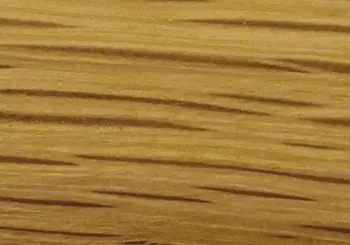
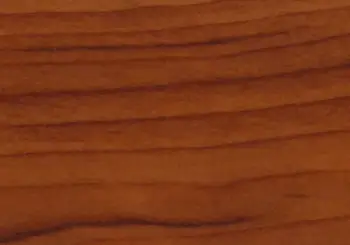
High-quality Laguiole knives use carefully selected handle materials (woods, horn, bone, antler, premium stabilized materials). Counterfeits often use plastics or cheap composites. Check for a solid feel, tight fit, uniform finishing, and no gaps.
Shop our Laguiole knives → | Protect your knife: leather sheaths →
IGP / GI for Laguiole: what it means
The Laguiole knife has been linked to a Geographical Indication (GI / IGP) framework that aims to define a specification and a geographic production zone, improving traceability and helping buyers distinguish compliant production. When a product clearly references GI/IGP compliance and provides documentation, it can be an additional reassurance.
Laguiole specialty knives and prestige editions
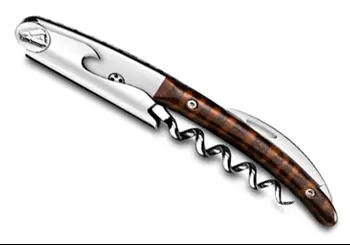
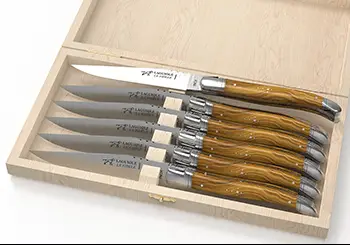
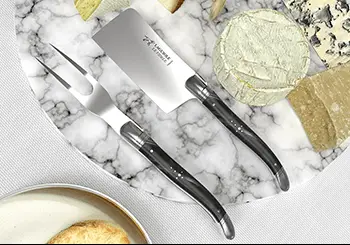
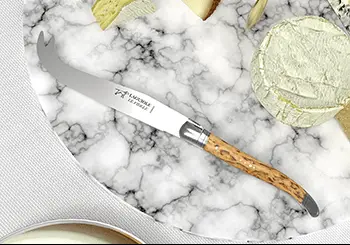
 Laguiole cheese knife with serpent wood handle
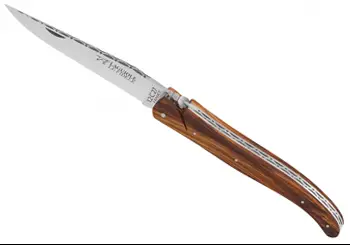
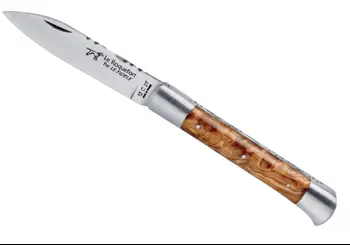
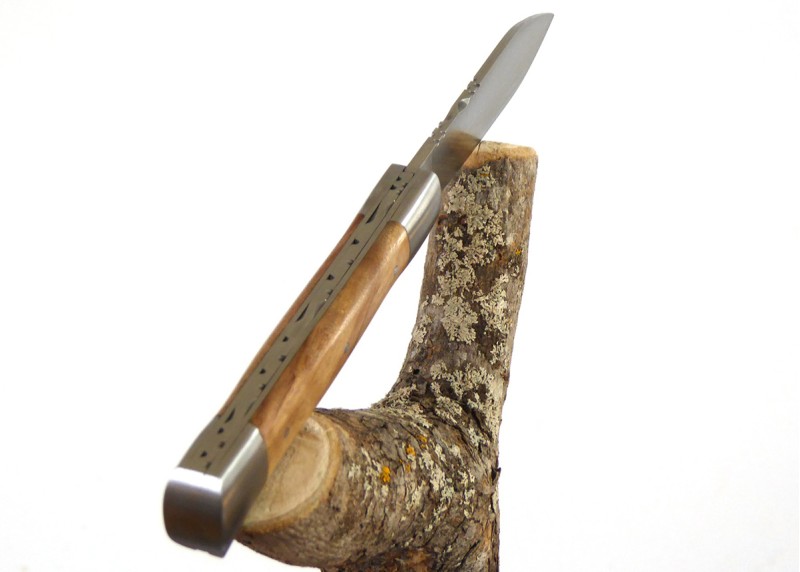 Roquefort knife with Sicilian olive wood handle
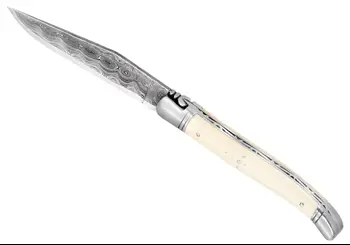
 Laguiole knife with mammoth ivory
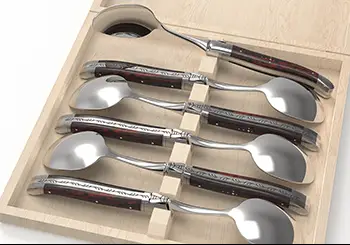
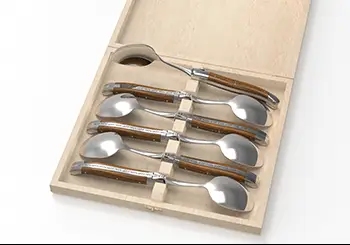
 Laguiole spoons set with gaiac wood handle
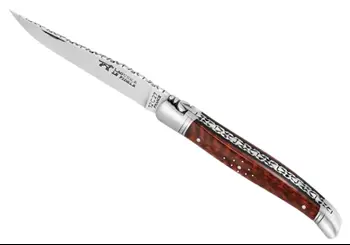
 Laguiole knife prestige edition with violet wood handle
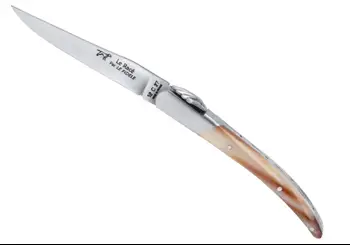
 Laguiole knife prestige edition with brown horn handle
FAQ – Counterfeit Laguiole knives
How can I tell if my Laguiole knife is fake?
Look for maker traceability (workshop name, origin), clean fit-and-finish (no gaps, smooth action), quality materials (handle, bolsters, blade), and realistic pricing. Very low prices and missing origin details are strong warning signs.
Is the bee (or “fly”) symbol proof of authenticity?
No. The bee is often copied. Focus instead on overall craftsmanship: spring finishing, alignment, polishing quality, and clear identification of the workshop. A glued or poorly finished bee is suspicious.
Why are some “Laguiole” knives extremely cheap online?
Many low-price “Laguiole” products are mass-produced imports. Handmade French cutlery requires skilled labor and premium materials, which makes ultra-low pricing unrealistic for true artisan production.
What visible defects usually indicate a counterfeit?
Common signs include glued bolsters, plastic/low-grade handles, rough edges, visible gaps, poor blade alignment, stiff or loose opening/closing, inconsistent polishing, and a lack of clear manufacturer information.
Can a genuine Laguiole knife be repaired?
Often yes—especially if it comes from an artisan workshop with real after-sales service. Repairs can include adjustments, restoration work, and in some cases blade or spring replacement. Many low-cost imports are not practically repairable.
What’s the safest way to avoid counterfeits?
Buy from a clearly identified French workshop or a specialized retailer, request traceability and documentation, prioritize warranty and service, and be cautious with marketplace listings offering “too good to be true” prices.