
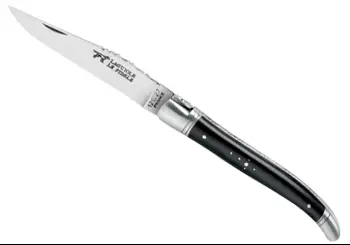
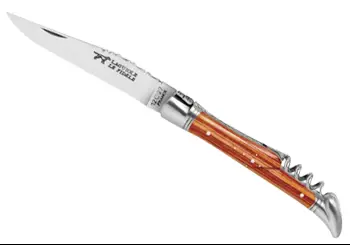
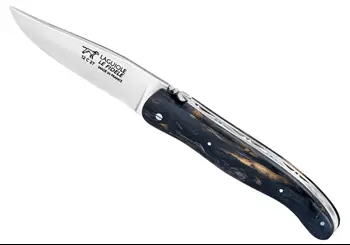
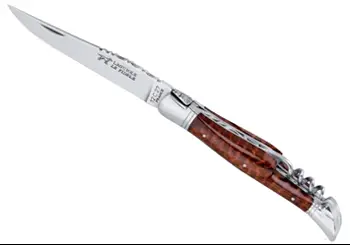
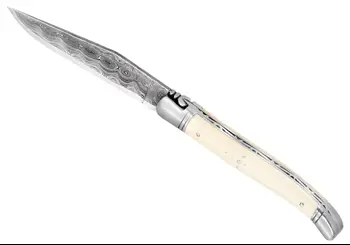
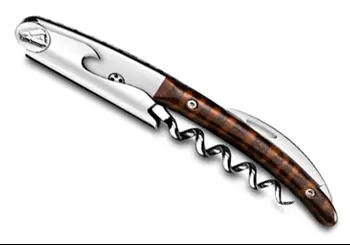
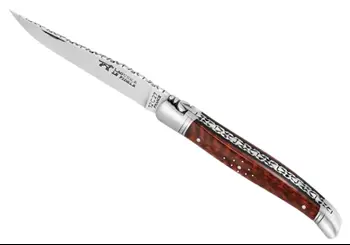
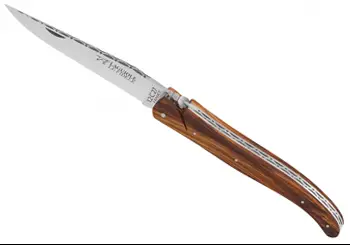



























Laguiole knife handle materials: woods, horn, bone & rare fossil materials
The handle material shapes the look, grip, durability and care of your Laguiole knife. From premium woods and natural horn to bone and fossil mammoth materials, each option offers a distinct feel and patina. Explore the main handle materials below, learn how to choose the right one for your use, and browse the matching knives.
Table of contents
- Woods (natural & premium species)
- Horn & antler
- Bone & fossil materials
- How to choose a handle material
- Frequently asked questions
Woods: natural & premium species
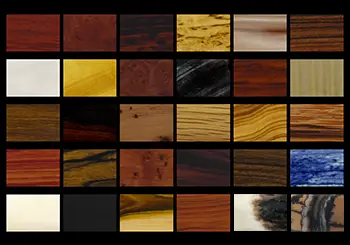
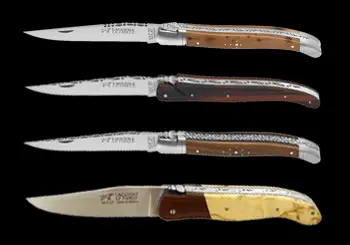
Wood handles are prized for their warm feel, authentic character and natural patina over time. Some species are chosen for density and toughness, others for striking grain patterns (burls, curls, waves).
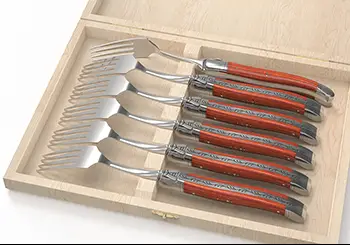
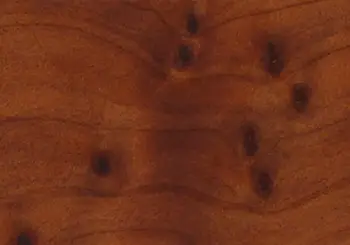
African Padauk Wood
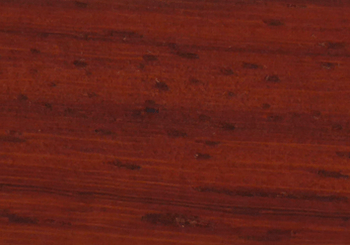
Coral wood (Chassalia corallioides) is a species of plant in the rubiaceae family. It is endemic to the island of Reunion, a French overseas department in the southwest of the Indian Ocean. It is easily recognizable by its coral-like inflorescence.
- Look & feel: warm tones, decorative character.
- Best for: table knives, gifting, display pieces.
- Care: wipe dry after cleaning; avoid dishwasher.
Browse Laguiole knives with African padauk wood handles
Amboyna Root Wood

Native to Asia, from its scientific name Pterocarpus indicus, amboyna wood, also known as “dragon blood”, bears the name of the island where it was discovered. Used in cutlery, marquetry and veneer, it is a precious species whose burr reveals patterns of unusual delicacy.
- Look & feel: highly decorative burr/burl patterns.
- Best for: premium gifts, collectors, statement pieces.
- Care: avoid prolonged moisture; wipe dry.
Browse Laguiole knives with amboyna root wood handles
Amourette Wood (Letterwood)

Brosimum guianense, the amourette wood or speckled letter, is a South American tree in the Moraceae family. Its wood is very dense and can recall patterns of snakeskin. The French name “lettre mouchetée” finds its origin in an ancient use of this wood: because of its solidity, it was used to make block letters. It comes from Guyana and Suriname most often and is used for musical instruments, knife handles and turning precious objects.
- Look & feel: dense, patterned grain reminiscent of snakeskin.
- Best for: daily use with character; lovers of exotic woods.
- Care: wipe clean; avoid soaking.
Browse Laguiole knives with amourette wood handles
Birch Wood
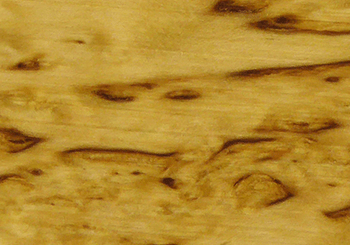
Birch wood from northern Europe is one of the whitest. The purity of birch is expressed naturally in more than one way: decoratively and ecologically too, since other species of birch grow quite easily in Southern Europe.
- Look & feel: clean, light tone; minimalist style.
- Best for: table knives, bright aesthetics.
- Care: dry after cleaning; avoid dishwasher.
Browse Laguiole knives with birch wood handles
Bocote Wood
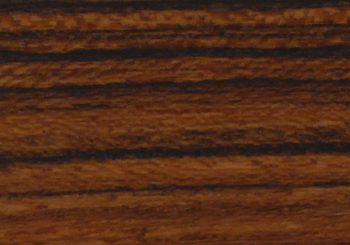
Native to Mexico or Costa Rica, bocote is a precious wood. Its color varies from light brown to dark brown with gold reflections, passing through shades of green and marked with black streaks.
- Look & feel: striking streaks and golden highlights.
- Best for: gifting; bold, exotic aesthetics.
- Care: wipe dry; avoid immersion.
Browse Laguiole knives with bocote wood handles
Boxwood
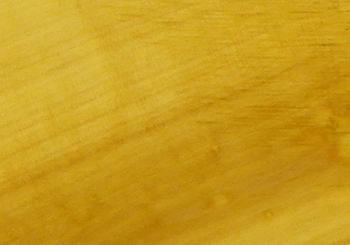
The common boxwood (Buxus sempervirens) is found throughout continental and Mediterranean Europe. Its wood takes on a shiny appearance after polishing, which makes it widely used in tableware, especially for making chess pieces.
- Look & feel: smooth finish; classic style.
- Best for: timeless gifting; elegant table knives.
- Care: wipe clean; dry immediately.
Browse Laguiole knives with boxwood handles
Briar Root Wood
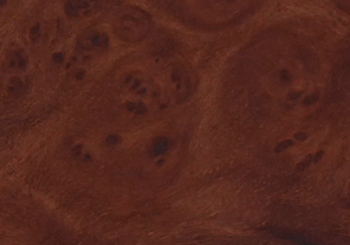
Erica arborea is an upright evergreen shrub or small tree. Briar root is prized in fine craftwork and traditionally used for pipe-making and decorative pieces thanks to its dense, attractive structure.
- Look & feel: warm, organic texture.
- Best for: refined table knives; distinctive natural look.
- Care: avoid soaking; wipe dry after cleaning.
Browse Laguiole knives with briar root wood handles
Cocobolo Wood

Cocobolo is a tropical hardwood from Central American trees in the Dalbergia genus. The heartwood ranges from orange to reddish-brown with darker streaks, and can be polished to a lustrous finish. Dense and highly valued, it is sought after for premium craftwork and distinctive handles.
- Look & feel: rich reds/browns; glossy finish potential.
- Best for: premium gifts; collectors; standout pieces.
- Care: avoid prolonged humidity; wipe and store dry.
Browse Laguiole knives with cocobolo wood handles
Curly Maple Wood
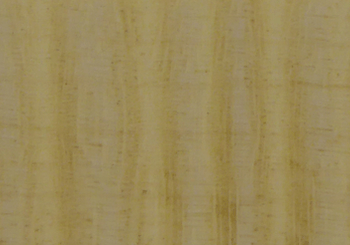
Curly or wavy maple shows shimmering “waves” caused by distorted fiber growth. Appreciated for its beautiful appearance, it is frequently used in musical instruments and fine furniture.
- Look & feel: luminous waves; elegant, refined style.
- Best for: table knives; classy gifts.
- Care: wipe clean; dry immediately.
Browse Laguiole knives with curly maple wood handles
Gaiac Wood (Lignum Vitae)
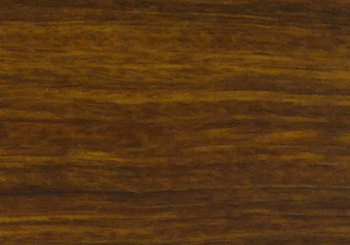
“Lignum vitae” means “wood of life”. Gaiac is among the densest tropical woods, valued for its hardness and weight, and used in many demanding applications.
- Look & feel: very dense; robust grip.
- Best for: frequent use; lovers of tough hardwoods.
- Care: wipe dry; avoid prolonged moisture.
Browse Laguiole knives with gaiac wood handles
Ironwood

Ironwood is a common name for various woods known for hardness, often with a density heavier than water. It is a popular choice for very robust handles.
- Look & feel: heavy, solid, durable sensation.
- Best for: regular use; rugged style.
- Care: wipe clean; avoid soaking.
Browse Laguiole knives with ironwood handles
Juniper Wood
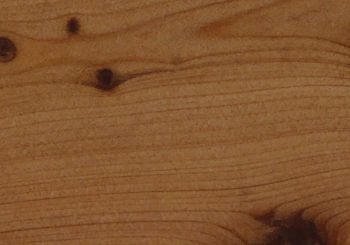
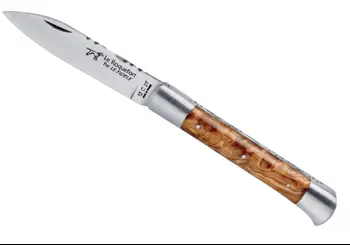
Reddish-brown to yellow wood, fairly hard, with fine grain and distinct white sapwood. Juniper (also called Cade) is recognizable by its pleasant spicy smell and good resistance to decay.
- Look & feel: aromatic, fine grain.
- Best for: gifts; characterful everyday pieces.
- Care: wipe dry; avoid heat sources and soaking.
Browse Laguiole knives with juniper wood handles
Oak Wood
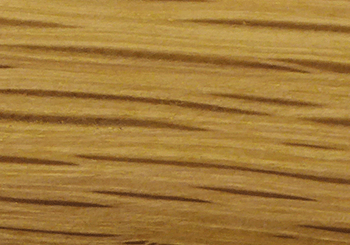
Until the 19th century, oak was a main species used in Europe for shipbuilding and timber frames. Today it is prized for beauty, hardness and durability, and is essential in barrel-making for aging fine wines and spirits.
- Look & feel: classic, sturdy, timeless.
- Best for: table knives; reliable everyday use (with proper care).
- Care: dry after cleaning; avoid dishwasher.
Browse Laguiole knives with oak wood handles
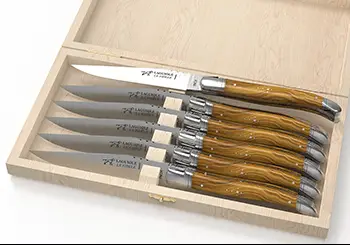
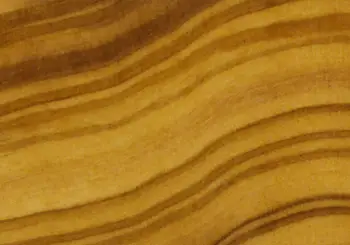
Olive Wood
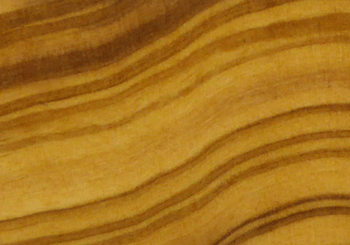
Olive wood is an emblem of the Mediterranean. Its cream to yellow-brown tones contrast with darker brown to black lines, giving it a timeless look and a warm, soft feel.
- Look & feel: warm grip; iconic Mediterranean grain.
- Best for: table knives; gifts; everyday use (with care).
- Care: avoid dishwasher; wipe and dry after cleaning.
Browse Laguiole knives with olive wood handles
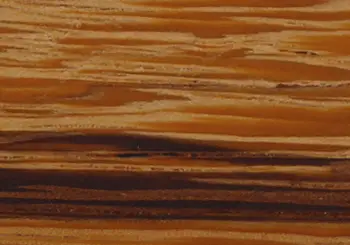
Serpent Wood
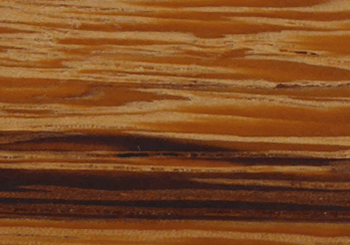
Serpent wood (Marmoroxylon racemosum) is a precious wood endemic to the Guyanese forest. Its deep yellow fibers marbled with irregular brown spots evoke snake scales. Do not confuse it with “snakewood/letterwood”, often used for amourette.
- Look & feel: rare, highly graphic pattern.
- Best for: collectors; standout premium gifts.
- Care: avoid soaking; wipe and store dry.
Browse Laguiole knives with serpent wood handles
Rosewood
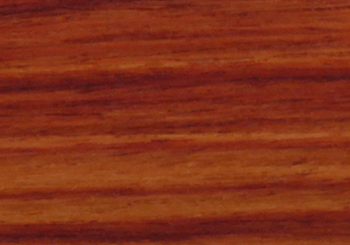
There are several “rosewoods”. Some varieties were historically used in marquetry and fine furniture for their polished finish. Known for a sweet aromatic smell and fine, regular grain, rosewood appeals to lovers of beautiful objects.
- Look & feel: fine grain; elegant, refined finish.
- Best for: gifts; premium table knives.
- Care: wipe clean; avoid prolonged humidity.
Browse Laguiole knives with rosewood handles
Royal Ebony Wood

Royal Ebony (Diospyros malabarica) is native to Southeast Asia. Also called Malabar Ebony or “Moonlight Ebony”, it is a pale wood with black veining, offering an impressive depth of finish.
- Look & feel: striking light/dark contrast; premium finish.
- Best for: collectors; luxury gifts.
- Care: wipe dry; avoid soaking and high heat.
Browse Laguiole knives with royal ebony wood handles
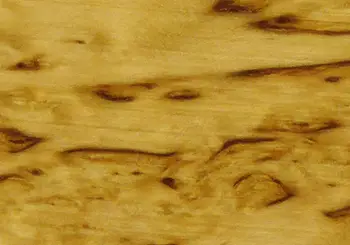
Thuja Root Wood (Burl)
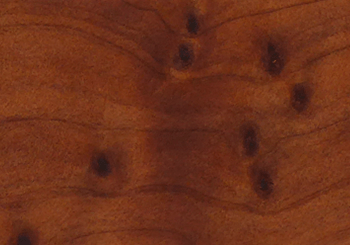
The irregular burls in thuja root give it a lively look. Its rich reddish-brown tones make it an eye-catcher, often used for decorative craftwork.
- Look & feel: highly decorative burl figure.
- Best for: gifting; collectors; statement table knives.
- Care: wipe dry; avoid prolonged moisture.
Browse Laguiole knives with thuja root wood handles
Violet Wood (Kingwood)
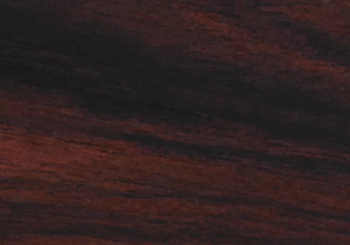
Known as Kingwood, it was historically associated with nobility. It belongs to the Fabaceae family and is close to rosewood species. Freshly cut it can show purplish tones that mellow toward brown over time, often streaked with black.
- Look & feel: noble tones; tight, fine grain.
- Best for: collectors; luxury gifts.
- Care: wipe dry; avoid soaking.
Browse Laguiole knives with violet wood handles
Walnut Wood

Walnut ranges from light brown to deep brown veined with black. Several species are used (European, American, Australian). Robust and stable, it is favored for fine furniture, decorative pieces, and historically even early aircraft propellers.
- Look & feel: classic dark tones; elegant grain.
- Best for: everyday elegance; premium table knives.
- Care: wipe dry after cleaning; avoid dishwasher.
Browse Laguiole knives with walnut wood handles
Ebony Wood

Ebony is known for its deep dark color and exceptional density. Traditionally used for fine objects and instrument parts, it offers a “luxury” feel and a very deep finish. An ebony-handled Laguiole makes a timeless gift.
- Look & feel: dense, deep finish; premium weight.
- Best for: luxury gifting; refined table knives; collectors.
- Care: wipe dry; avoid prolonged moisture and dishwasher.
Browse Laguiole knives with ebony wood handles
Pistachio Wood
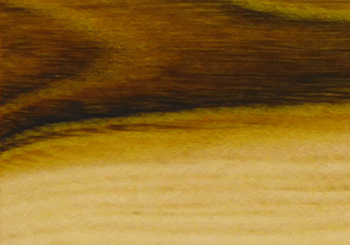
Pistachio wood grows in Mediterranean garrigue and maquis. Its hard wood is used in cabinetmaking and marquetry, and can show contrasting shades of yellow, green and brown.
- Look & feel: natural contrast; Mediterranean character.
- Best for: gifts; distinctive table knives.
- Care: wipe clean; dry immediately.
Browse Laguiole knives with pistachio wood handles
Yew Wood
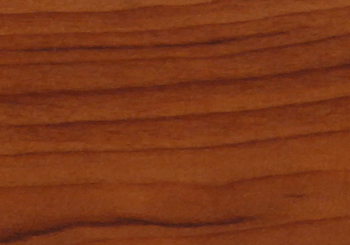
Yew (Taxus baccata) is valued for its fine workability, strength and elasticity. Its warm orange-to-reddish tones and lively contrast make it a distinctive choice for crafted handles.
- Look & feel: warm reddish tones; refined, crafted look.
- Best for: gifting; premium everyday carry (with care).
- Care: wipe dry; avoid soaking and dishwasher.
Browse Laguiole knives with yew wood handles
Horn & antler: natural, unique and full of character
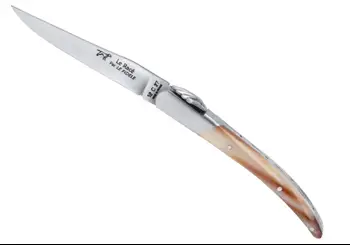
Horn is a natural material with unique shades and variations—no two handles look exactly the same. It develops a distinctive patina over time and is often chosen for its traditional, authentic appeal.
Blond Horn Tip

Horn is a natural material that varies in nuance. These varying hues are part of its beauty and make each handle unique. Our handles are carved from solid horn to deliver robust, top quality knives.
- Look & feel: lighter shades; elegant natural patina.
- Best for: refined table knives; classic gifting.
- Care: avoid heat and soaking; wipe and dry after cleaning.
Browse Laguiole knives with blond horn handles
Brown Horn

Like blond horn, brown horn shows natural variations that make each handle unique. It offers deeper tones and a strong traditional look.
- Look & feel: darker tones; bold natural character.
- Best for: table knives; authentic style; gifting.
- Care: avoid soaking and heat; wipe dry after cleaning.
Browse Laguiole knives with brown horn handles
Deer Horn / Antler
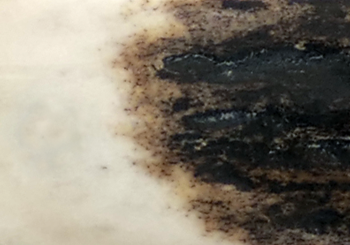
Deer antler brings a highly natural look with distinctive texture and grain. It is often chosen for rustic-chic pieces and authentic “terroir” character.
- Look & feel: textured, organic, one-of-a-kind.
- Best for: collectors, outdoor style (depending on model), unique gifts.
- Care: avoid soaking and heat; wipe and store dry.
Browse Laguiole knives with deer antler handles
Bone & fossil materials: heritage, rarity and distinctive textures
These materials stand out for their unique appearance and history. The bones supplied by our provider Mercorne are sourced from animal carcasses and are accompanied by a CITES permit, which certifies that their trade complies with international regulations and that they were obtained legally, without harming species conservation. Genuine prehistoric mammoth ivory, generally recovered in Siberia (Russia), is stabilized and processed in the workshop for use as a craft material.
Bovine Bone

Bovine bone is a naturally occurring material used for centuries for everyday objects. In Aveyron, traction oxen hardened by their work were known for remarkably strong bone.
- Look & feel: light tone; traditional appearance.
- Best for: classic table knives; heritage style.
- Care: avoid soaking; wipe clean and dry immediately.
Browse Laguiole knives with bovine bone handles
Giraffe Bone
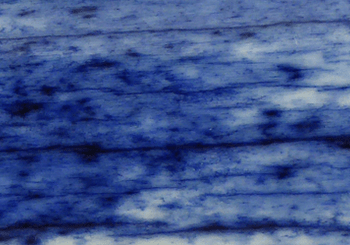
Giraffa camelopardalis: the giraffe is endemic to the African continent. The bone plates come only from carcasses found in parks and reserves in South Africa.
- Look & feel: rare material; distinctive finish.
- Best for: collectors; exceptional gifts.
- Care: avoid soaking and heat; wipe and store dry.
Browse Laguiole knives with giraffe bone handles
Mammoth Ivory

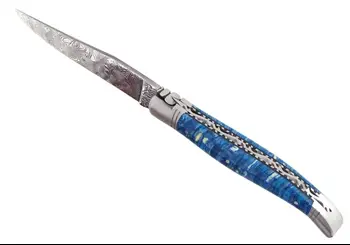
Fossil mammoth ivory from Siberia can come with a certificate of authenticity (estimated age between 7,000 and 10,000 years). It may show brown or blue-green inclusions due to minerals such as vivianite, making each piece visually unique.
- Look & feel: fossil character; unique natural inclusions.
- Best for: collectors; prestige gifts.
- Care: avoid shocks, heat, and soaking; wipe and store dry.
Browse Laguiole knives with mammoth ivory handles
Fossil Mammoth Molar
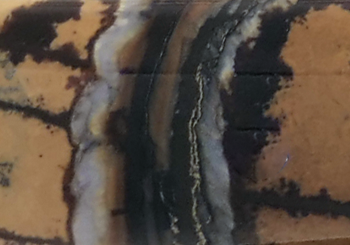
Fossil mammoth molar is valued for its mineralized texture and naturally occurring patterns. It is a rare choice, typically selected for highly collectible pieces.
- Look & feel: mineral texture; unique patterning.
- Best for: collectors; exceptional gifts.
- Care: avoid shocks, heat, and soaking; wipe and store dry.
Browse Laguiole knives with mammoth molar handles
How to choose a handle material
Choose based on use
- Table & dining: prioritize comfort in hand and simple care (stable woods, horn depending on finish).
- Everyday carry: look for dense, durable materials and avoid prolonged moisture.
- Collecting & gifting: consider rare or highly decorative options (burls, premium woods, fossil materials).
Choose based on care
- Avoid the dishwasher to protect the handle and mechanism.
- Clean with a soft cloth, then dry immediately.
- Store in a dry place and avoid prolonged heat exposure.
Frequently asked questions
Which handle material is the most durable?
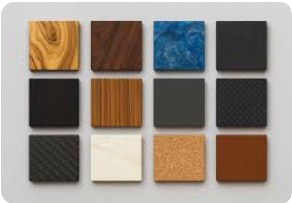
Durability depends on material density and finish. Very dense hardwoods (such as ebony or gaiac) can offer excellent toughness. The best choice also depends on how and where you use the knife, plus how carefully you clean and dry it.
Wood or horn which should I choose ?
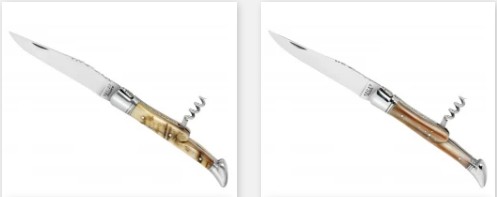
Wood provides a warm feel and a wide range of grains and colors. Horn offers a unique natural patina and variations from piece to piece. Choose based on the grip you prefer and how strictly you follow care recommendations.
How do I care for a wood handle?
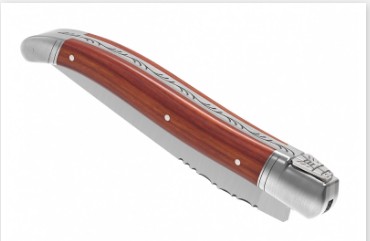
Wipe with a slightly damp cloth, then dry immediately. Avoid soaking and never put the knife in the dishwasher. Storing it dry helps preserve the wood’s beauty over time.
Why does every horn handle look different?
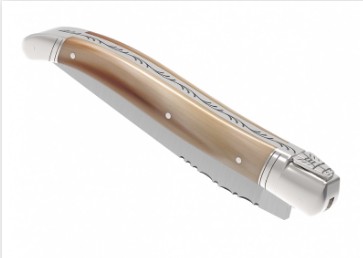
Horn is a natural material with real variations in shade and pattern, which is exactly what makes each handle unique.
What should I know about fossil mammoth materials?
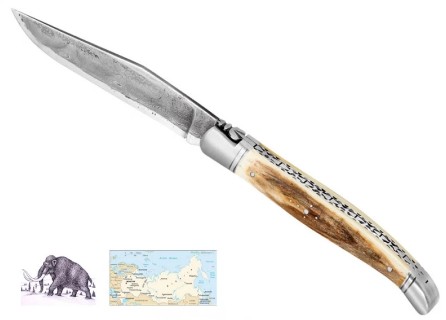
Fossil mammoth materials are distinct from modern regulated ivory. Rules can vary by country for shipping and documentation. Adding clear information about origin and traceability can help customers feel confident.
Key takeaway
Woods (olive, ebony, walnut, burls), horn/antler, and fossil materials each create a different look, grip and patina on a Laguiole knife. Start from your intended use (table, everyday, collecting), and keep care simple: gentle cleaning, immediate drying, and dry storage.