























How to Use a Laguiole Sommelier: Corkscrew, Care & Practical Tips
A Laguiole sommelier is an elegant and practical wine tool designed to open bottles with precision. Depending on the model, it combines a corkscrew worm, a lever and a small blade used to cut the foil. When used correctly and properly maintained, it can provide many years of reliable service.
This guide explains how to use a Laguiole corkscrew, how to preserve its mechanism, how to care for natural handle materials and which mistakes to avoid when opening a bottle of wine.
Contents
- Understanding how a Laguiole sommelier works
- How to open a bottle step by step
- Common mistakes to avoid
- Caring for the corkscrew and mechanism
- Caring for wood and horn handles
- Laguiole sommelier vs standard corkscrew
- Why choose a French-made Laguiole sommelier?
- How to choose a Laguiole sommelier
- Examples of Laguiole sommeliers
- FAQ
Understanding How a Laguiole Sommelier Works
The principle is simple: the spiral corkscrew worm enters the cork, while the lever rests on the bottle neck and allows the cork to be extracted progressively and smoothly.
Many Laguiole sommeliers also include a small blade for cutting the foil cleanly before extraction. Lever shape, worm length and handle ergonomics may vary from one model to another.
The best technique is to work in line with the cork, avoiding excessive sideways pressure, in order to protect the corkscrew and reduce the risk of breaking an old or fragile cork.
How to Open a Bottle with a Laguiole Sommelier
1) Cut the foil
Use the small blade to cut the foil below the lip of the bottle. Rotate the bottle or the knife with a controlled motion, then remove the upper part of the foil.
2) Position the corkscrew in the center of the cork
Place the point of the worm as close as possible to the center of the cork. A centered insertion reduces the risk of entering at an angle or breaking the cork.
3) Screw in smoothly
Turn the corkscrew clockwise while keeping the sommelier aligned with the cork. Insert the worm deeply enough to obtain a secure grip, without necessarily driving it all the way through the cork.
4) Place the lever on the bottle neck
Rest the lever on the rim of the bottle. Depending on the model, extraction may be performed in one or more stages. Keep the bottle stable throughout the process.
5) Extract the cork progressively
Lift the handle gently while using the lever as a support point. Extraction should remain smooth and progressive: avoid sudden pulling.
6) Finish by hand
When the cork is nearly out, finish gently by hand to avoid a sudden pop, wine splashes or damage to a fragile cork.
Common Mistakes to Avoid with a Laguiole Corkscrew
- Screwing in at an angle: this increases stress on the worm and can damage the cork.
- Applying sideways force: the lever should work in line with the bottle neck.
- Pulling too sharply: progressive extraction is safer and more efficient.
- Using the sommelier as a general-purpose lever: this can distort or damage the mechanism.
- Putting the sommelier in the dishwasher: heat and moisture can damage natural handle materials and the mechanism.
How to Care for a Laguiole Sommelier
Clean after use
Wipe the corkscrew, blade and metal parts with a soft, slightly damp cloth, then dry thoroughly. Avoid prolonged immersion in water.
Lubricate the mechanism if needed
If the mechanism becomes less fluid, apply a very small amount of suitable oil to the pivot. Open and close the mechanism several times, then wipe away any excess.
Check the corkscrew worm
The worm should remain straight, regular and free from visible deformation. If you notice unusual play, twisting or damage, avoid forcing the tool and have it inspected.
Caring for Wood and Horn Handles
Handles made from natural wood, such as ebony or olive wood, should be protected from excessive moisture, major temperature changes and dishwasher cleaning.
Natural horn handles require the same precautions: do not leave them soaking in water and avoid prolonged exposure to heat.
Natural materials may show slight variations in color and grain. These differences are part of the unique character of each Laguiole sommelier.
Laguiole Sommelier vs Standard Corkscrew: What Is the Difference?
A standard corkscrew is designed primarily to remove a cork. A Laguiole sommelier combines this function with a refined folding design, a foil-cutting blade and carefully selected handle materials such as wood or horn.
The difference is therefore not only aesthetic. Ergonomics, balance, quality of the corkscrew worm, lever design and finishing all contribute to a more precise and enjoyable bottle-opening experience.
For wine lovers, collectors or anyone looking for a distinctive gift, a Laguiole sommelier can be both a practical tool and a piece of traditional French cutlery craftsmanship.
Why Choose a French-Made Laguiole Sommelier?
Choosing a French-made Laguiole sommelier means choosing a product made according to traditional cutlery know-how, with particular attention paid to assembly, finishing, adjustment and handle materials.
The Thiers region has a long-established cutlery tradition, and French workshops continue to produce Laguiole knives, sommeliers and table cutlery using skilled manual operations.
For buyers looking for an authentic piece, the place of manufacture, the name of the workshop, the quality of the materials and the finishing are more meaningful indicators than the word “Laguiole” alone.
How to Choose a Laguiole Sommelier
Several criteria can help you choose the right model:
- Handle material: wood, horn or other natural materials depending on your aesthetic preferences.
- Grip: the handle should provide good stability during extraction.
- Corkscrew quality: a fine, well-formed worm enters the cork more easily.
- Lever system: choose a mechanism that suits your preferred way of opening wine.
- Manufacturing origin: if authenticity matters to you, choose a sommelier made in France by a recognized cutlery workshop.
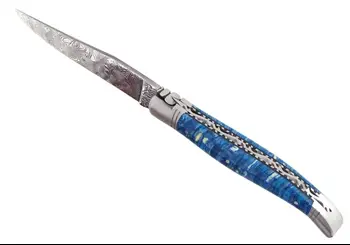
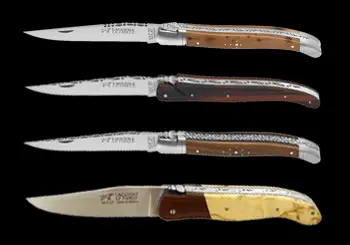
For a gift, handle material is often one of the main selection criteria: ebony offers a sober and elegant appearance, olive wood has a warm and distinctive grain, while blond horn gives each piece particularly unique natural variations.
Examples of Laguiole Sommeliers

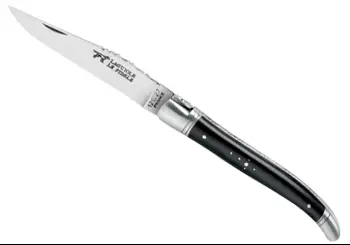
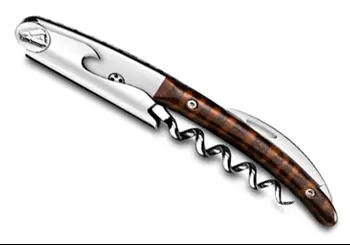
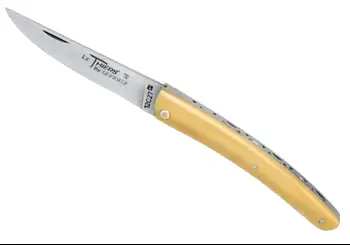
Laguiole sommelier with ebony wood handle
A sober and elegant style combined with a dense wood and deep natural tones.

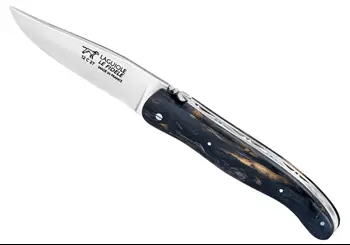
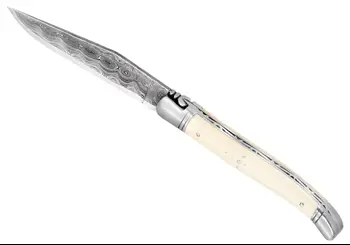
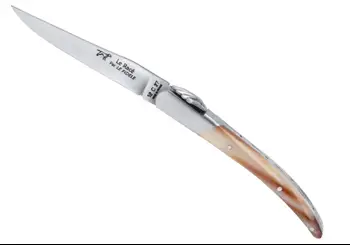
Laguiole sommelier with blond horn handle
A natural material whose colors and patterns make every sommelier unique.

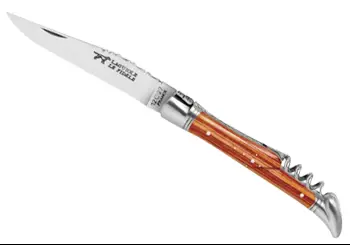
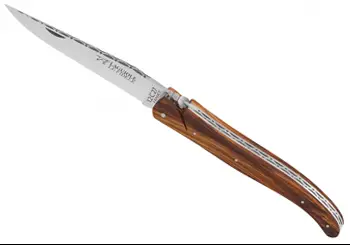
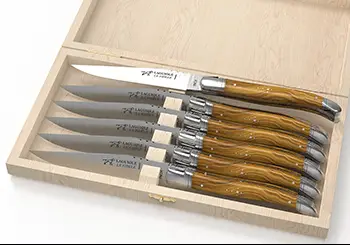
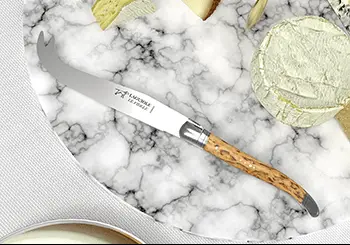
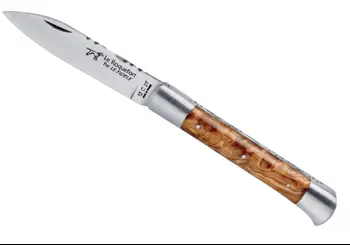
Laguiole sommelier with olive wood handle
A warm natural wood, recognizable by its distinctive and contrasting grain.
FAQ – Laguiole Sommelier & Corkscrew
How do you use a Laguiole corkscrew correctly?
Position the corkscrew worm in the center of the cork, screw it in smoothly, rest the lever on the bottle neck and extract the cork progressively without applying sideways force.
Should the corkscrew worm go all the way through the cork?
Not necessarily. The important point is to obtain enough grip to extract the cork without unnecessarily piercing all the way through it. The number of turns depends on the worm length and the cork.
Can a Laguiole sommelier go in the dishwasher?
No. Hand washing is recommended, especially for wood and horn handles. Always dry the sommelier immediately after cleaning.
How should I care for the corkscrew worm?
Clean it after use and check regularly that it remains straight and free from deformation. Avoid forcing it into a very hard cork if it is not correctly centered.
Which handle material should I choose?
Ebony offers a classic and understated look, olive wood has a warm and distinctive grain, and blond horn features natural variations that make each piece unique.
Can a Laguiole sommelier be repaired?
Depending on the problem, certain parts or adjustments may be repairable by a skilled workshop. If you notice unusual play, a bent corkscrew or a damaged mechanism, avoid forcing the tool.